
Once people hear about the jhanas, the deep, joyful, settled states of meditation the Buddha described, a very natural thing happens. They want them. And they set out to get them the way they’ve gotten everything else worth having: by setting a goal, working hard, and measuring progress.
In this practice, that’s the one approach that doesn’t work. Not because the jhanas are out of reach, but because reaching is what keeps them away. They arise when you get out of the way, and loving-kindness turns out to be an unusually good way of doing exactly that.
If you’re new to the jhanas themselves (what they are and what each one feels like), start with What Are the Jhanas?. This piece is about something narrower: what “not chasing” actually means while you’re sitting.
Why Chasing Feels Like the Right Idea
It’s worth being fair to the impulse. The jhanas are real, and wanting them isn’t foolish. Almost everyone who keeps practicing eventually meets them, and people often describe them as some of the most peaceful experiences of their lives. Of course you’d want that.
And everywhere else, effort works. If you want to run farther, you train. If you want to understand something, you study harder. So when meditation feels slow, the obvious move is to apply more of what has always worked: more focus, more discipline, more pushing.
The trouble is what that effort feels like from the inside. Wanting a state you don’t have is a form of craving, and craving always shows up as a little tension: a tightening in the head, the jaw, the chest. Every bit of pushing adds some. And the jhanas arise in a mind that has let go of exactly that tension.
What Chasing Looks Like on the Cushion
Hardly anyone sits down thinking, “Now I will chase the jhanas.” Chasing is subtler than that. It usually looks like one of these:
- Waiting. Part of your attention is on the warmth, and part of it is watching the door for something bigger to walk in.
- Checking. A pleasant moment comes, and immediately: Is this it? Is this the first jhana?
- Replaying. Yesterday’s sit was wonderful, so today you’re trying to get back to it, and measuring every minute against it.
- Grading. You finish a session disappointed that “nothing happened,” as though a sit without fireworks was wasted.
- Steering. You’ve read that the feeling may move from the chest to the head, so you nudge it upward. Or you’ve read about the second jhana, so you try to quiet the joy down.
- Switching. It isn’t happening fast enough, so you add a concentration trick or a different technique on top.
Every one of these feels like dedication. Every one of them is the mind leaning forward, and leaning forward is tension.
Why Loving-Kindness Is the Opposite of Chasing
This is where the meditation object matters. Tranquil Mind uses the feeling of loving-kindness, or metta, rather than the breath, and that choice does a lot of quiet work here.
Metta is wishing well without wanting anything back. When you sincerely wish your Spiritual Friend happiness and peace, there is nothing in that wish for you to grab. Its whole direction is outward and generous. It’s hard to hold that feeling and grip at the same time; the two pull in opposite directions.
Your attention is on someone else, not on your progress. Once you’re radiating to your Spiritual Friend, the session is about them. That moves you, and your scorecard, out of the center of the picture, which is a large part of what getting out of the way means.
The object is already pleasant. The mind settles toward pleasant things on its own. You aren’t straining to hold a subtle, neutral object in place, so there’s less forcing from the very first minute.
The joy grows out of the same warmth. When the first jhana comes, it isn’t something new you have to go and find. It’s the warmth you’ve been radiating, grown brighter and more joyful. You don’t change objects or reach for it. You keep doing what you were already doing.
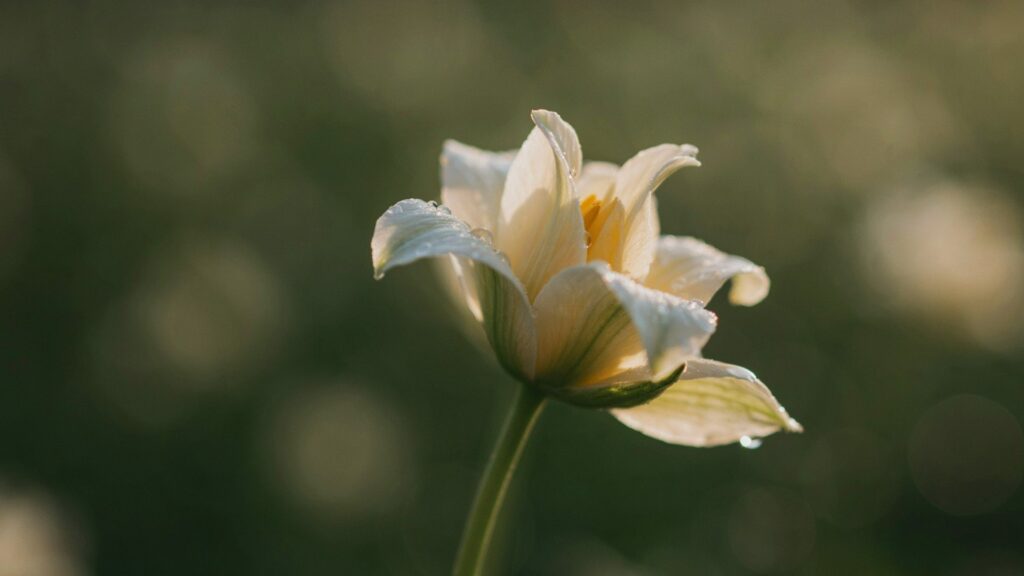
The book puts it with a simple image: a flower blooms on its own schedule. You plant the seed, water it, give it sunlight, and wait. Pulling on the petals doesn’t help.
What “Getting Out of the Way” Looks Like in Practice
None of this means doing nothing. It means doing the simple things fully and letting the results take care of themselves.
Keep radiating, whatever shows up. If joy arises, or tingling, or lightness, or a sense of the body fading, notice it, appreciate it, and keep sending loving-kindness to your Spiritual Friend. That’s the whole instruction.
Treat wanting as a distraction, because it is one. When you catch yourself waiting, checking, or comparing, it gets the same response as any other wandering thought: the 6Rs. Recognize that the mind has started reaching. Release it. Relax the little tightness the reaching created, in the head and in the body. Re-smile. Return to the warmth for your friend. Repeat, as many times as it comes back.
Save the analysis for afterward. If you want to think about what happened in a session, do it once the session is over. Working out “which jhana was that?” while you’re sitting is just another distraction to 6R.
Don’t steer the feeling. If the warmth moves up toward your head, let it. If it hasn’t, don’t push it. Wherever the feeling wants to be is where you radiate from.
Let a good sit go. A wonderful session is not a standard the next one has to meet. Each sit starts fresh.
Keep the conditions steady. Thirty minutes a day, every day, does more than an occasional heroic effort. Living by the precepts keeps the mind clear and untroubled when you sit. And the smile keeps the whole thing light, which is the quality straining kills first.
Signposts, Not Summits
It helps to hold the jhanas the way this tradition does: as signposts along the road, not summits to conquer. They appear, and then they shift from one to the next on their own as the mind settles. The movement isn’t upward toward some peak. It’s downward, quieter and quieter, like settling into still water.
So there’s no need to keep score. If you’re sitting every day with loving-kindness, using the 6Rs and smiling, you are already doing everything that leads there. How long it takes varies a great deal from person to person, and a session without anything dramatic is still doing its work.
When something does shift, that’s a good moment to talk with a teacher. There can be subtle things at that stage that are much easier to sort out in conversation than on your own.
Try It for Yourself
The best way to understand this is to sit with it. The complete Tranquil Mind method walks through the whole practice, from finding the feeling of loving-kindness to radiating it to your Spiritual Friend. And if you’d like a real teacher alongside you, Tranquil Mind offers free one-on-one guidance. It’s always free, because we’re a nonprofit.
May you be happy. May you be peaceful. May you be free from suffering.
Want the practice that lets them arise?
The Tranquil Mind explains loving-kindness as your meditation object, the 6Rs, and what the jhanas are and are not. It’s free as a PDF. Tell us where to send it.
One email with your book. Nothing else.
